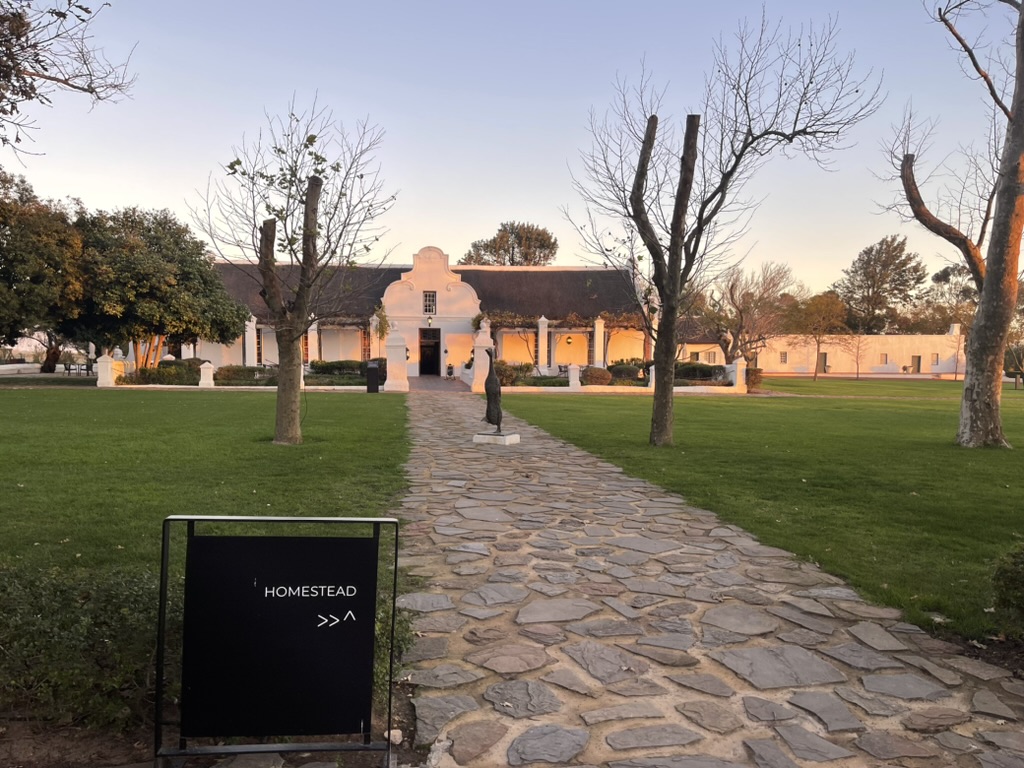
Knowing I was going to Cape Town I booked a last minute wine tasting at the Ken Forrester vineyard in Stellenbosch for the day I was flying back to the States. Since they don't have rooms at Ken Forrester I was assigned a wine tasting and a suite at Vergenoegd Löw, one of the oldest and most intact early wine farms of the Cape of Good Hope dating back to the late 1600s, and I asked for two suites so my new friend could experience it with me.
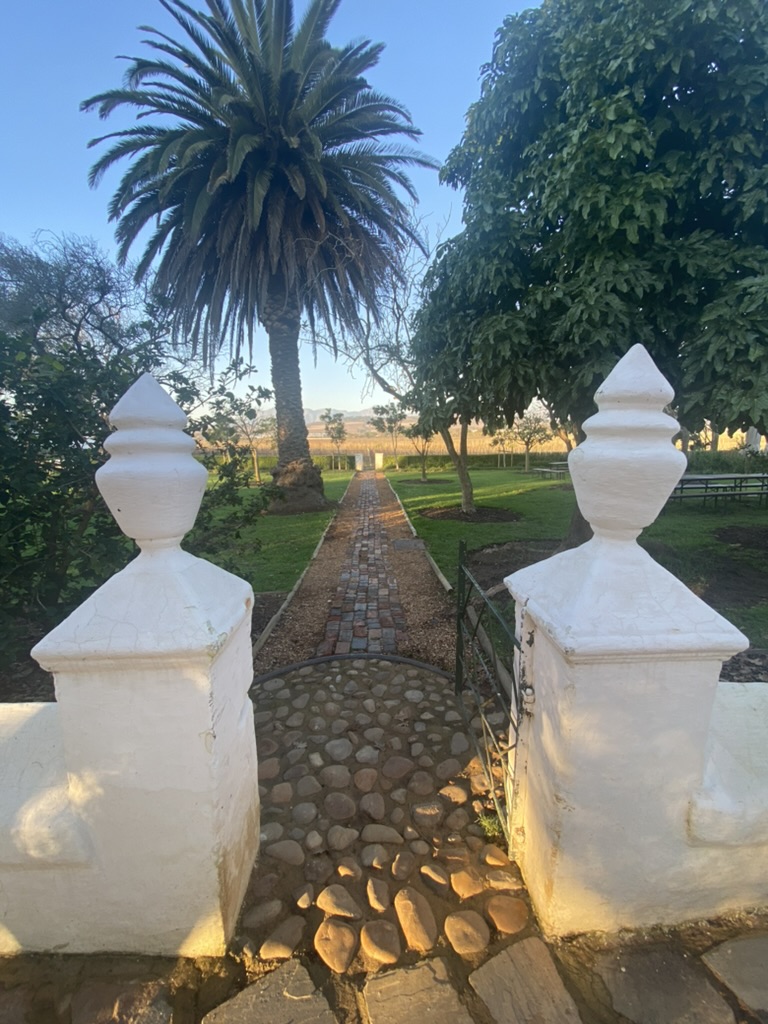
The estate has witnessed a myriad of transformations, from the days of slavery to horse racing and now to a thriving vineyard that is part of the European Heritage Project and a WWF conservation site. The estate is a unique meeting point between two native floras. Today, Cape Flats Sand Fynbos, once widespread, is critically endangered with less than 2% conserved in small pockets around the Cape. As stated on their website, "at Vergenoegd Löw they are dedicated to preserving the natural beauty of the land with numerous conservation initiatives documenting and protecting the unique fynbos that thrives on their farm."
The modern suites, each with its own sitting room and hot tub, are located in a restored farm manager's house and are spacious and clean. There are complimentary bottles of wine in the room and a fully stocked limited complimentary minibar fridge. The bedding is wonderfully soft, with 300 thread count percale linens, allergy-free down pillows, fine fiber pillows towels with the beautiful lion crest, and plush bathrobes.
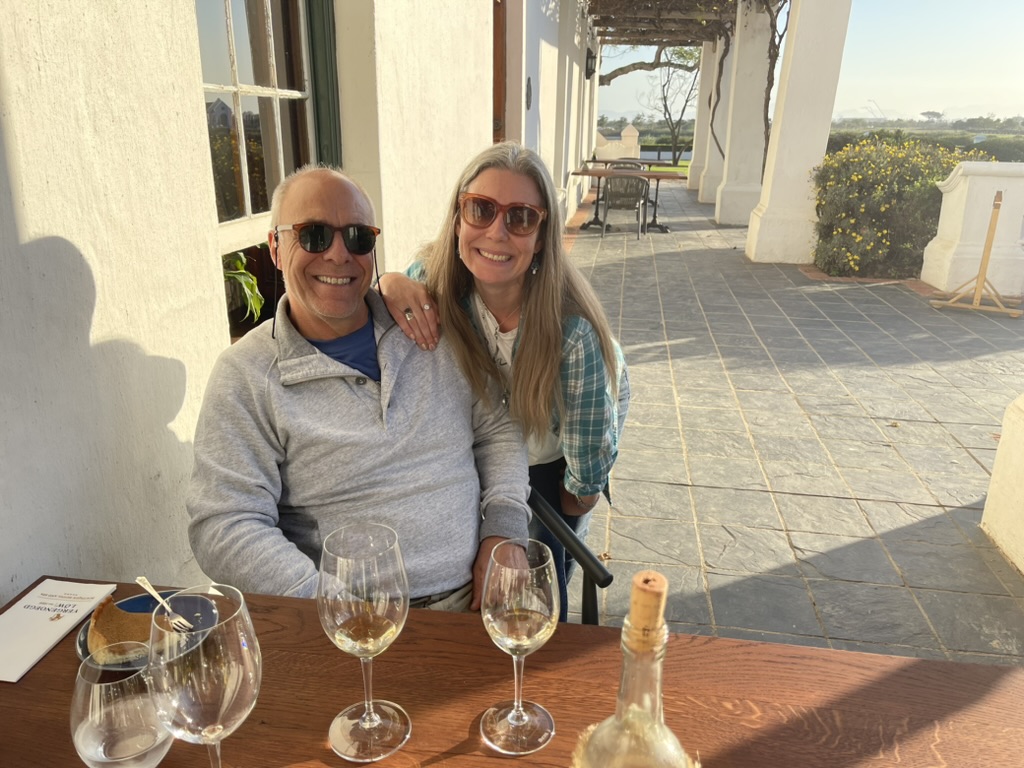
With the winter sun setting, we enjoyed a beautiful afternoon wine tasting on the veranda of Vergenoegd Löw with Sommelier Charlie expertly guiding us through the estate's wine offerings.
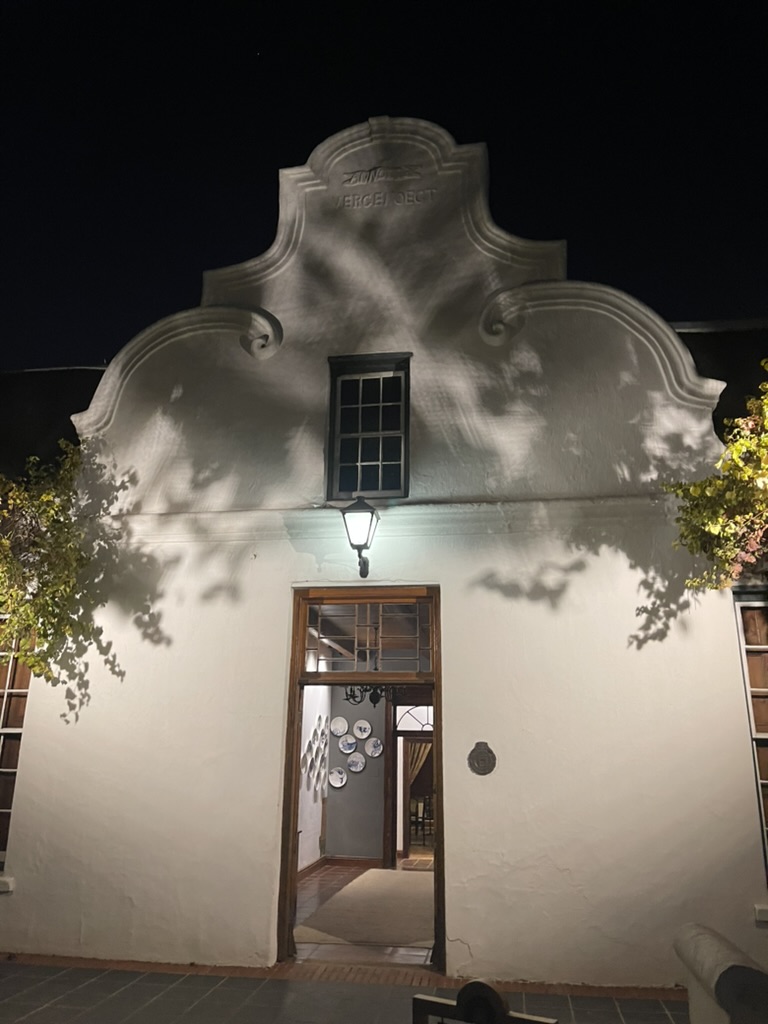
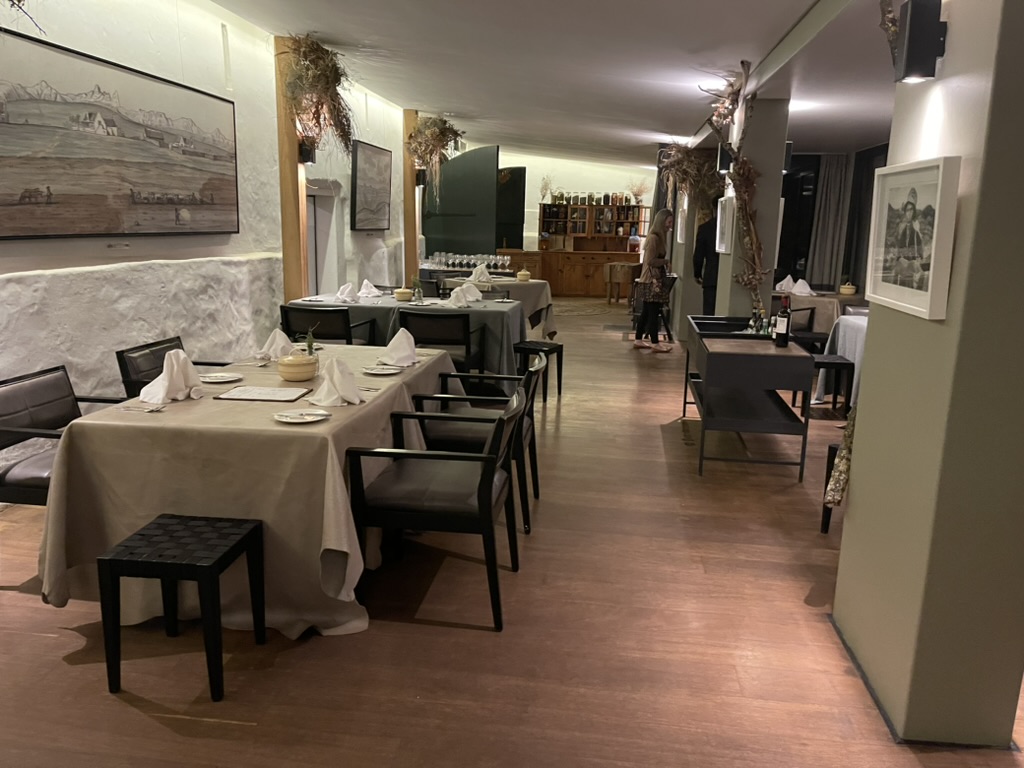
Our evening continued with a beautifully prepared dinner at Clara’s Barn, a beautifully appointed restaurant housed in the oldest barn in the Western Cape. The ambiance is a modern take on a South African farm kitchen. We enjoyed the five-course menu crafted by Head Chef Drikus Brink. As we were the only ones in the restaurant, we were disappointed that Chef Drikus did not come out to say hello so that we could complement him on the excellent meal. Even the ceramic plates were beautiful and we wanted to know where they came from.
To have my friend with me, in all of her inquisitiveness asking our waiter about what it was like to work in S. Africa, and the state of the economy, provided me with an education I would never have received. I also enjoyed learning the origin of the Dutch and S. African names in Cape Town.
During dinner, the last remaining staff member kept popping his head into the dining room, polite but clearly eager to shepherd us back to our suites so he could finally go home to his family. When we stepped outside, the night was utterly still, the kind of silence that amplifies your heartbeat. It didn’t help that, once we were inside, we heard the unmistakable sound of the main doors being locked behind us.
I would feel irresponsible if I didn't mention that we only found out after the tasting that due to it being off-season, the staff would be leaving and we would be the only ones staying the night on the property. Had we not had the wine tasting, and if we had a car, we may have opted to sleep in a hotel nearby if we had been forewarned that we were to be alone on the property. We were told that the security would remain and that if we needed them their phone line was listed in a card by our beds. The vineyard was not in the town of Stellenbosch, and with no car, we felt isolated. The driveway alone felt like miles to the security station, which we weren't convinced somebody was monitoring.
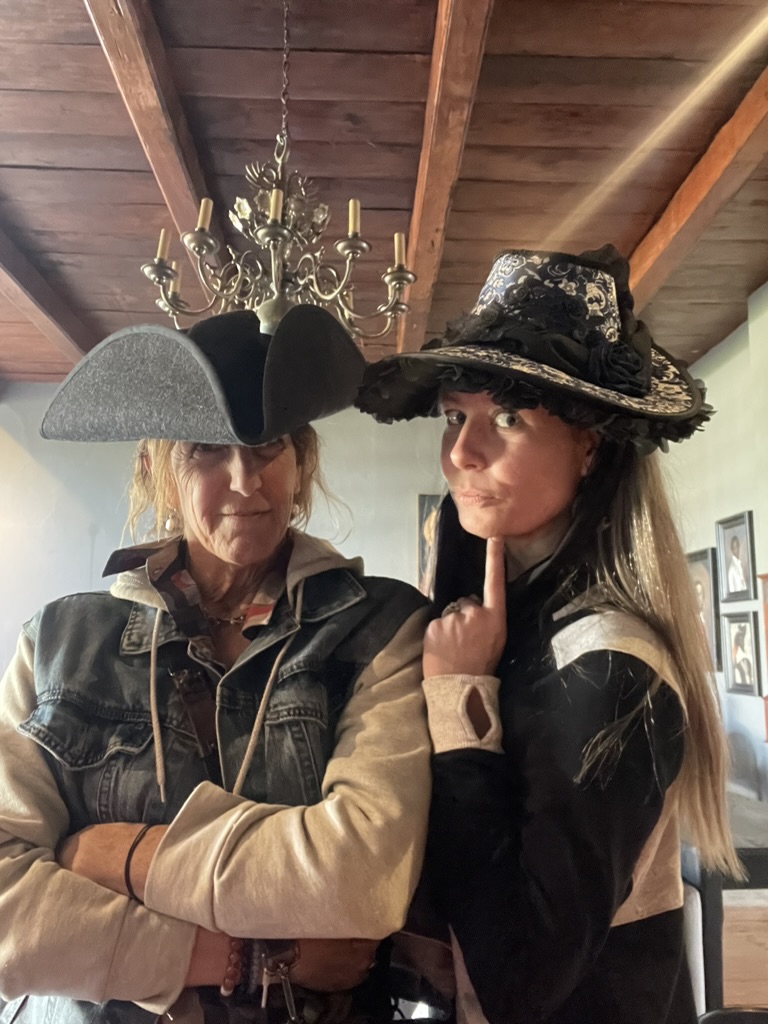
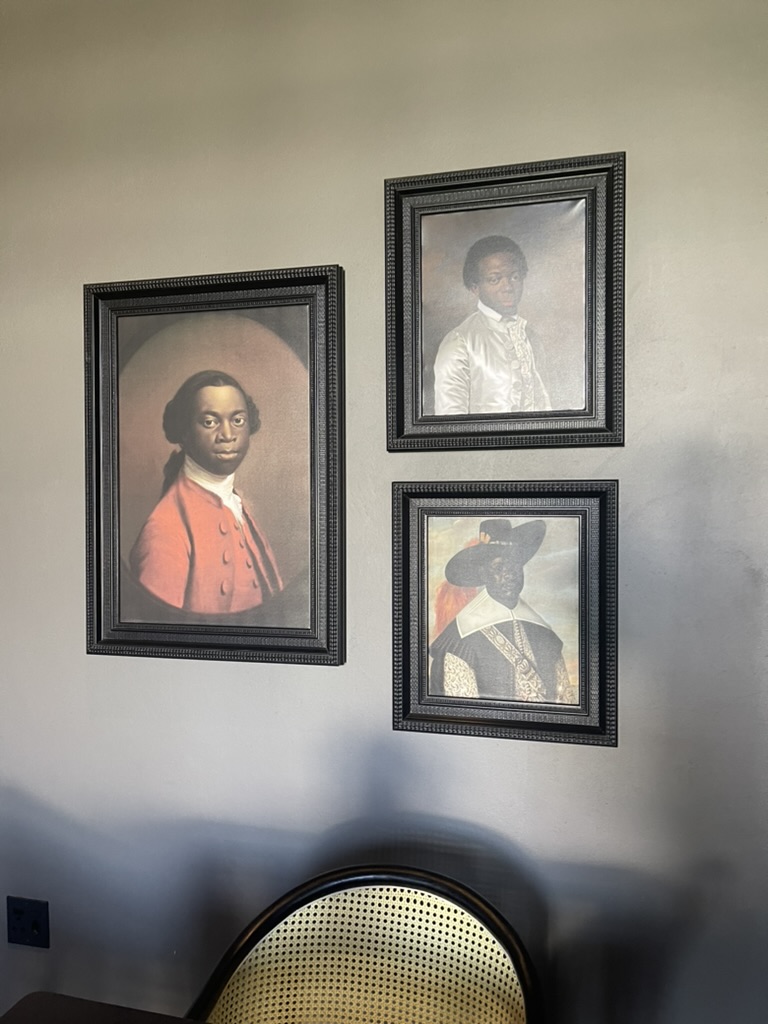
With a full belly and a head swimming from wine, my imagination quickly took the reins. The paintings I had seen earlier in the main building began flashing before me like frames from an horror film. Was this place haunted by its history? Or were we, absurdly, part of some grand kidnapping plot? Clutching a butter knife beneath my pillow, my only weapon I could find in the suite, I devised a plan: if someone entered my room, I’d act deranged. Wild hair, rolling eyes, the whole performance. Surely, that would send anyone running.
The irony wasn’t lost on me that I had opted for the “safe route,” skipping a more adventurous South African tour with a Masai guide, only to find myself paralyzed by fear in what was supposed to be a tranquil wine estate. I texted my friend next door to make sure she was all right, but she didn’t respond until later, after being jolted awake by the sound of the front door rattling. When it happened again, we counted to three, threw open our doors simultaneously, and she dashed into my room so we could be terrified together.
We tried calling security. Nothing. Tried the GM’s personal line. Straight to voicemail. Feeling responsible for our safety, I told her to try to sleep, I’d stand guard. When the door rattled a third time, I checked the clock. Not yet an hour passed. I convinced myself it must just be security checking the locks, a fact that, had we known, might have allowed me some sleep, of which I had not a wink.
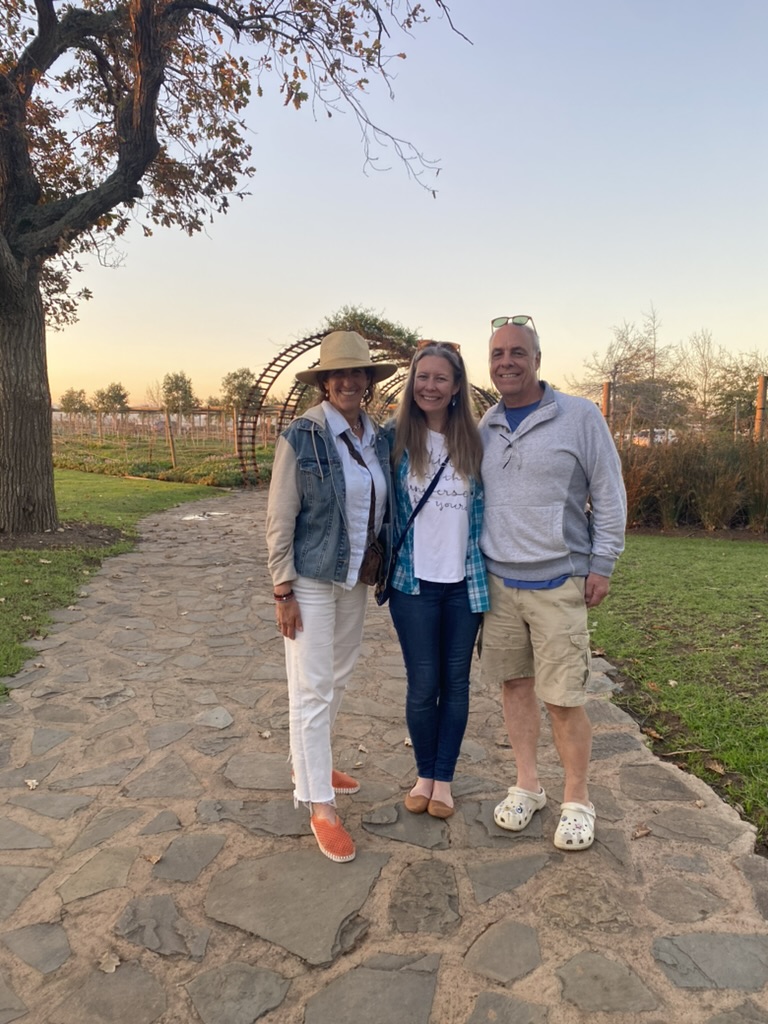
By morning, the world had rearranged itself. Sunlight streamed through the curtains, and I woke my friend with a grin: we had survived the night. The air outside was cool and clean, the vineyards washed in early light, workers already bent over the vines. It's difficult to explain the aliveness we felt, pure exhilaration, and a little foolish as we made our way to Geuwels (Gables) Restaurant, where a potbelly stove radiated warmth and the smell of breakfast filled the air.
We devoured a skillet breakfast with poached eggs, mushrooms, sausage, and spinach and everything tasted like heaven. The GM, cheerfully apologetic, joined us for coffee and stories about mountain biking. The tension of the night before melted into laughter. The food, prepared with fresh, seasonal, indigenous ingredients, felt like a benediction after our long, haunted vigil.
A unique feature of Vergenoegd Löw is its famous Indian Runner Ducks, which play a crucial role in the estate’s sustainable farming practices. Since the 50’s many people drive there just to watch the ducks emerge from the pond and head across the Homestead grounds to the vineyards, where they feast on snails and insects, thus reducing the need for harmful pesticides. The ducks not only protect the vineyards but also provide ducklings to other wine farms adopting similar sustainable practices.
After breakfast we watched the ducks go to work and then high tailed it out of there to visit Ken Forrester vineyards, where they also farm sustainably with no herbicides or pesticides, and they till by hand: "a hugely labour intensive endeavor, but very satisfying, we prune, thin bunches and leaves all by hand and finally we harvest by hand." The vineyard we visited is a family property in Stellenbosch, "just 5 kms from the cool Atlantic and in the sheltered lee of the majestic Helderberg mountain. This range includes older vineyards, showing more depth of character and concentration. Ideal food wines, with structure and elegance." We particularly loved the Chenin-Blanc, and celebrated being alive.
If you plan to stay there, we recommend inquiring whether staff will be present on the property during your stay, and make sure that you have a direct line to security, that works.
Ken Forrester Vineyard, Cape Town
Normally not one for day drinking, we savored Ken Forrester’s excellent wine with surprising gusto, our final hurrah before I headed to the airport for my long journey home. The moment I boarded the plane, exhaustion took over, and I slept straight through the 13-hour flight. When I finally opened my eyes upon landing, the woman beside me confessed she’d been worried about me. I didn’t have the energy to explain why I had not slept the night before.
As the African sun sets on these cherished memories, I find myself drawn back to this magical land. The stories we experienced, the animals we encountered, and the adventures we shared linger in my mind like the last notes of a beautiful song. Yet, there's an unfinished melody calling me back. It's interesting to me that I was warned to play it safe and yet, the choice I made left me feeling scared for my life, and I do wish that I had chosen to take the path that was pulling me most. I still yearn to walk alongside Malaki, to hear his tales and learn from his wisdom. I long to meet the passionate souls dedicating their lives to conservation, their hands shaping the future of this wild paradise. For in their eyes, I suspect I'll see the true spirit of Africa - resilient, hopeful, and endlessly inspiring. This journey may have ended, but I know in my heart it's merely the first chapter of a greater adventure. Africa has etched itself into my soul. And someday soon, I'll answer its call to return, to delve deeper, and to discover the profound connections between its people, its wildlife, and the land they both call home.